
How CPCB IV+ Gensets & Efficient Equipment Reduce Environmental Impact

A generator today is not just about power availability. It plays a direct role in environmental responsibility, regulatory compliance, and long-term operating efficiency. With the introduction of CPCB IV+ norms, choosing the right genset has become as much about emissions and efficiency as it is about reliability.
Here are the key aspects that explain how CPCB IV+ gensets and efficient equipment reduce environmental impact.
1. CPCB IV+ Emission Standards
CPCB IV+ norms are mandatory for all new diesel gensets in India from 1 July 2023.
They focus on:
- Significant reduction of nitrogen oxides (NOx)
- Lower particulate matter emissions
- Emission control at the exhaust level
These standards directly address air pollution and public health concerns.
2. Shift from CPCB II to Advanced Engine Design
Unlike earlier norms, CPCB IV+ requires:
- Engine-level emission reduction
- Advanced combustion control
- Integrated exhaust after-treatment systems
This makes cleaner performance a built-in feature rather than an add-on.
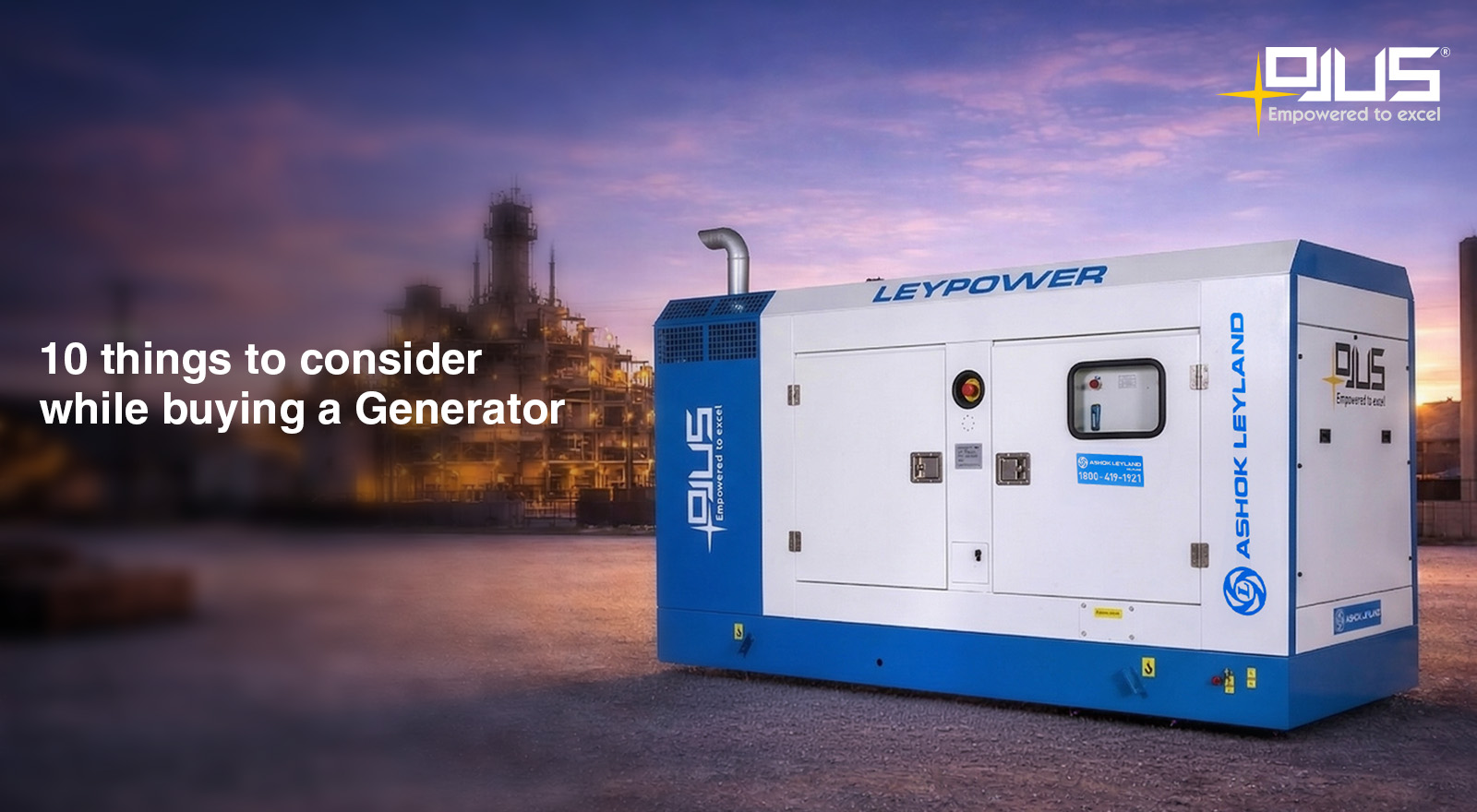
3. OJUS CPCB IV+ Compliant Gensets
OJUS Power offers a full range of CPCB IV+ compliant gensets.
- Engines from trusted OEMs such as Ashok Leyland, Perkins, Volvo Penta, and Baudouin
- Designed to meet current regulations without compromising reliability or output
4. Advanced Emission Control Technologies
OJUS gensets incorporate:
- Optimised fuel injection systems
- Enhanced combustion efficiency
- Catalytic exhaust treatment
These technologies reduce NOx, particulate matter, and hydrocarbon emissions before they are released.
5. Noise Reduction and Urban Compatibility
Environmental impact also includes noise pollution.
OJUS gensets feature:
- High-quality acoustic enclosures
- Effective vibration isolation
- Lower operating noise levels
This makes them suitable for hospitals, residential complexes, and urban installations.
6. Fuel Efficiency and Lower Carbon Footprint
Efficient equipment consumes less fuel for the same power output.
Benefits include:
- Reduced diesel consumption
- Lower CO₂ emissions
- Lower operating costs over the generator’s life
Efficiency directly translates into environmental and financial gains.
7. Intelligent Load Management
Modern control systems allow gensets to:
- Operate efficiently under variable loads
- Avoid fuel wastage during low-load operation
- Maintain stable performance across duty cycles
Smarter operation means fewer unnecessary emissions.
8. Longer Engine Life and Reduced Waste
Cleaner combustion results in:
- Lower carbon deposits
- Reduced engine wear
- Extended maintenance intervals
This reduces resource consumption and improves asset life.
9. Real-Time Monitoring and Better Asset Control
Advanced monitoring systems help:
- Track key operating parameters
- Detect inefficiencies early
- Optimise performance and maintenance planning
Better control leads to consistent compliance and efficiency.
10. A Responsible Approach to Backup Power
CPCB IV+ compliant gensets represent:
- Cleaner backup power solutions
- Compliance with current and future regulations
- A balance between performance, efficiency, and sustainability
OJUS Power delivers CPCB IV+ gensets that meet regulatory demands while ensuring reliable performance, lower emissions, and long-term operational value, setting a new benchmark for responsible power generation.
Learn more about our generators on
https://ojuspower.com/ojus-generators