
10 Things to Consider While Buying a Generator
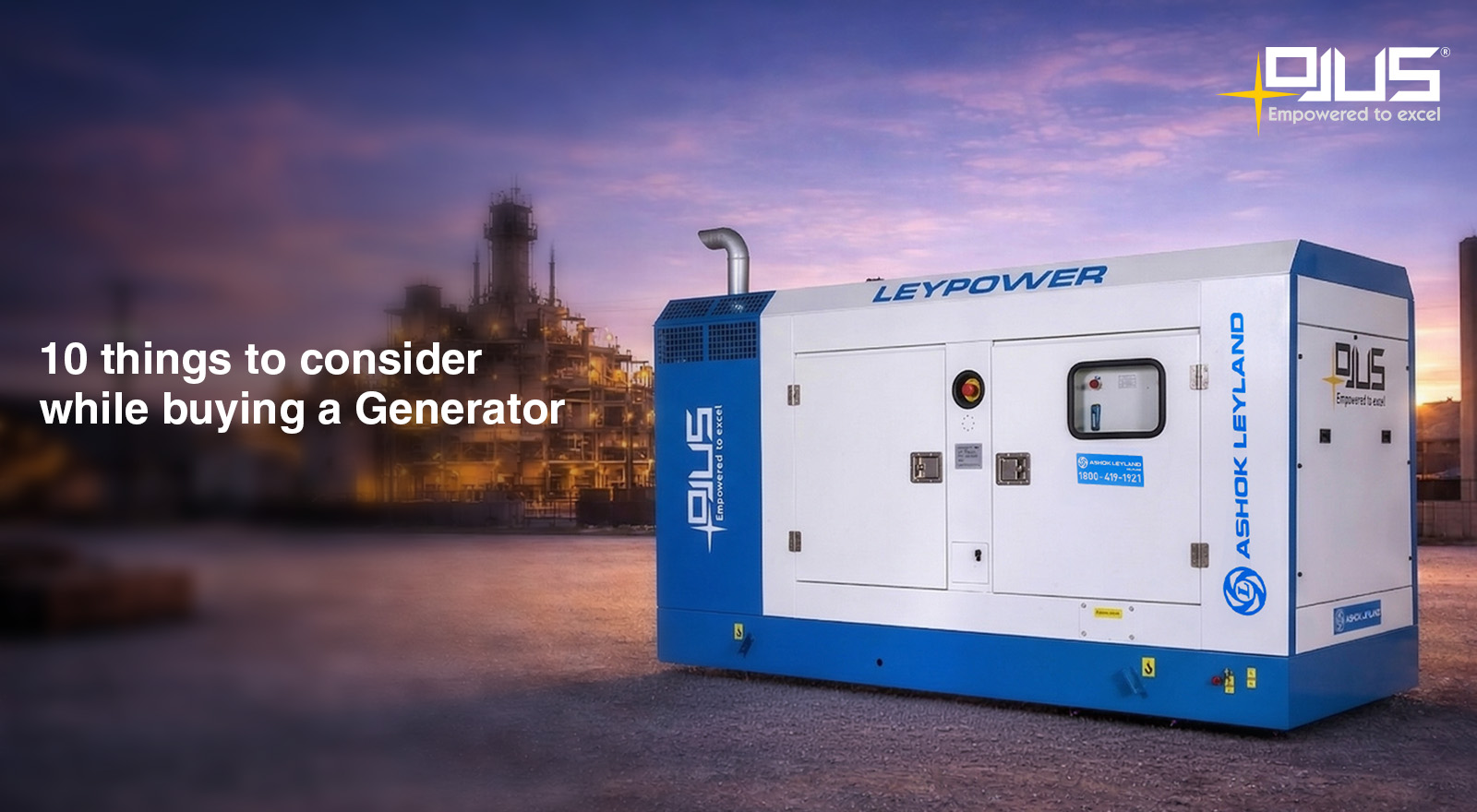
A generator is not just a backup device—it’s a critical power asset that protects operations, productivity, safety, and business continuity. Whether you’re buying a generator for an industrial unit, commercial facility, hospital, data center, or large residential setup, making the right choice upfront saves money, downtime, and future headaches.
Here are 10 essential factors you should evaluate before buying a generator.
1. Power Requirement (kVA / kW Load Calculation)
Start with a clear understanding of how much power you actually need.
List all equipment that will run on backup power
Consider starting load vs running load (especially motors, elevators, compressors)
Include future expansion buffer (15–25%)
Undersizing leads to overload failures; oversizing leads to higher fuel and capex costs.
2. Type of Generator (Diesel, Gas, Hybrid)
Choose the fuel type based on usage pattern and availability:
Diesel Generators – Reliable, high torque, best for industrial & continuous use
Gas Generators – Cleaner emissions, suitable where gas supply is stable
Hybrid Systems – Generator + solar + battery for optimized fuel usage
Diesel remains the most preferred for heavy-duty and mission-critical applications.
3. Application & Duty Cycle
Not all generators are built for the same purpose.
Standby – Occasional power cuts
Prime – Regular power supply in areas with unreliable grid
Continuous – 24×7 operation without grid support
Match the generator rating with its intended operating hours, not just capacity.
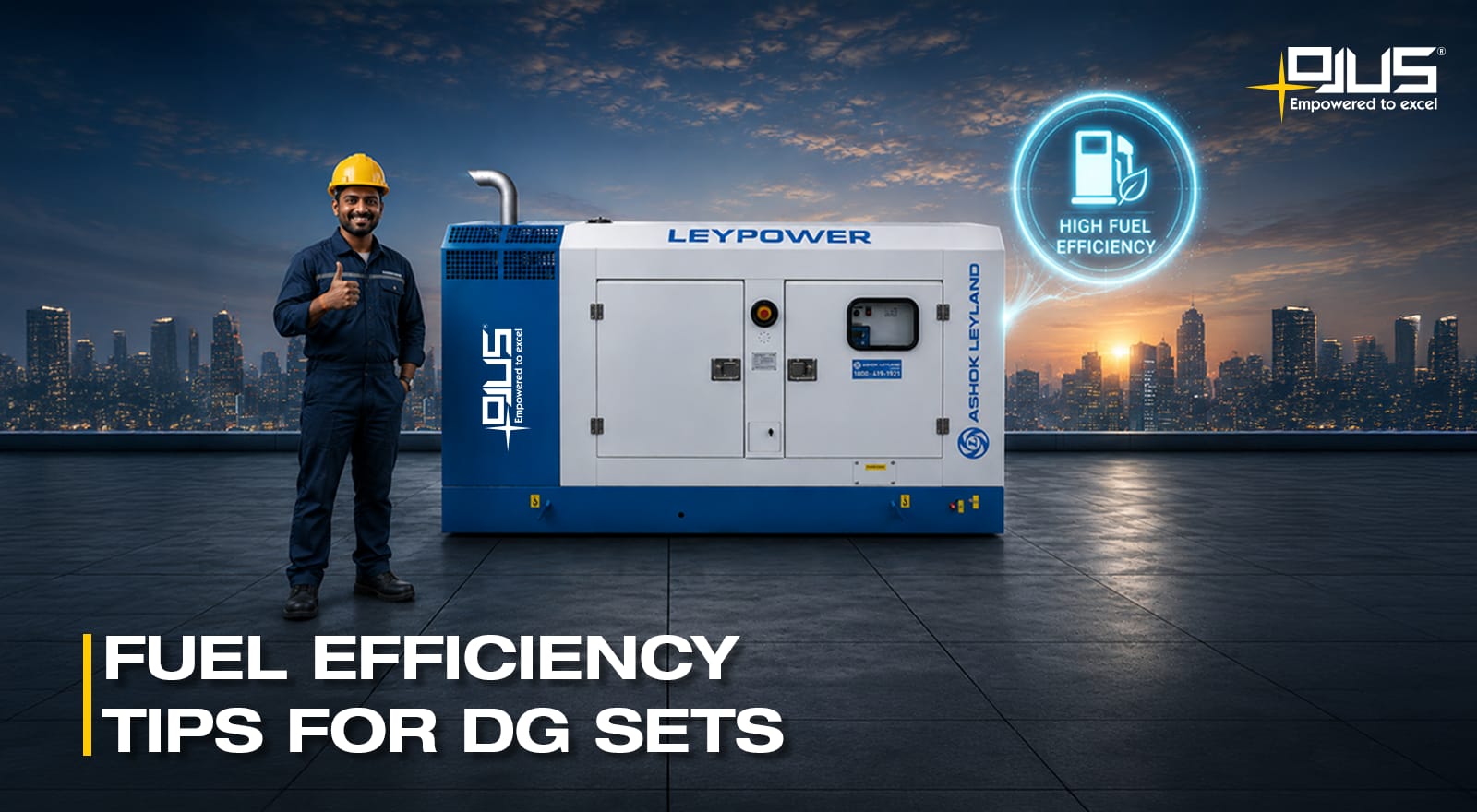
4. Fuel Efficiency & Operating Cost
The real cost of a generator is not the purchase price—it’s the lifecycle cost.
Fuel consumption at different load levels
Maintenance intervals and spares cost
Oil consumption and service downtime
A fuel-efficient generator can save lakhs over its lifetime.
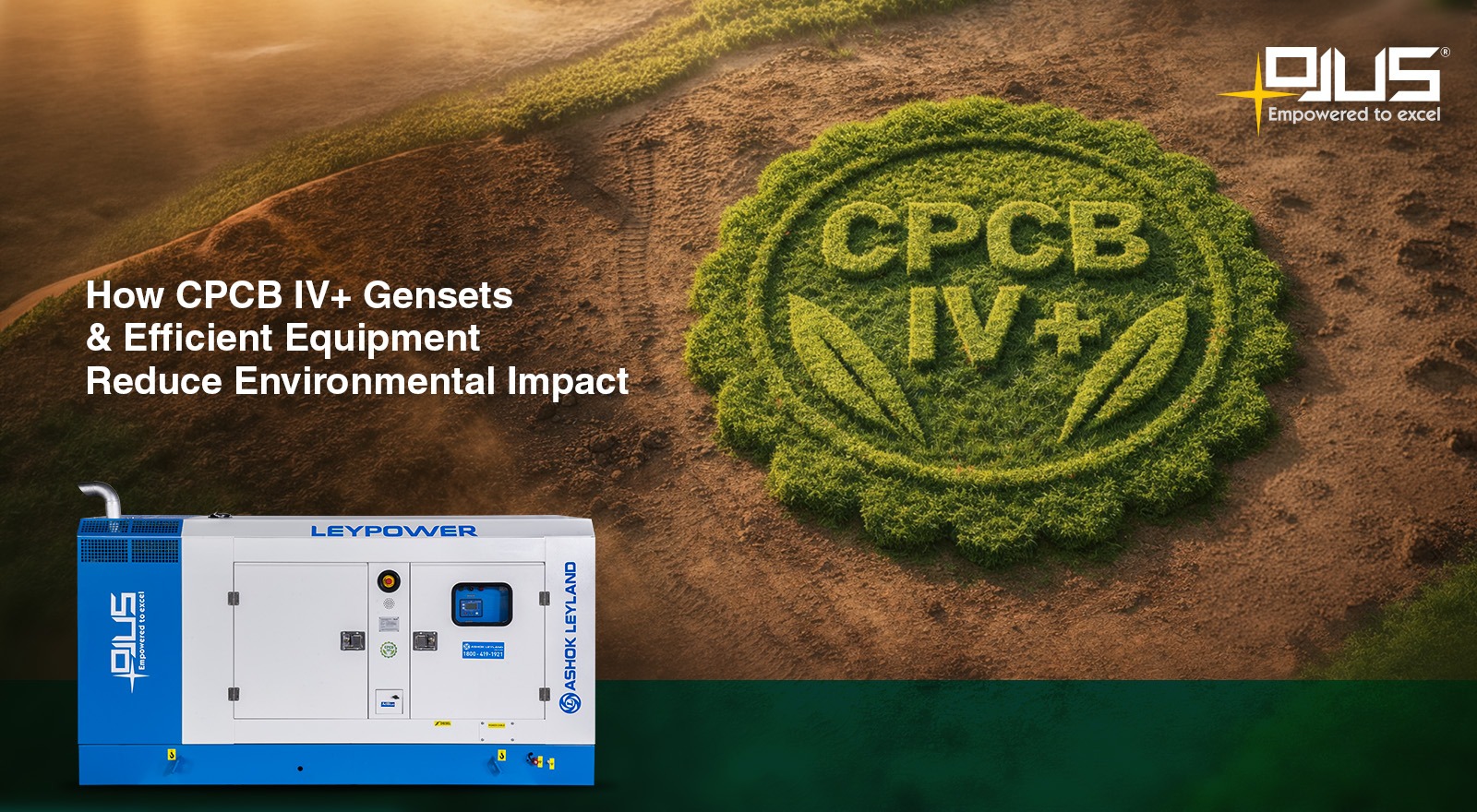
5. Compliance with Emission & Regulatory Norms
Ensure the generator meets current emission standards:
CPCB norms (India)
Noise pollution regulations
Local pollution control approvals
Non-compliant generators can attract penalties or operational shutdowns.
6. Noise Level & Acoustic Design
Especially critical for urban, commercial, and residential installations.
Silent / acoustic enclosure quality
Vibration isolation
Noise level measured in dB(A) at 1 meter
Poor acoustic design impacts nearby operations and regulatory approvals.
7. Control Panel & Automation Features
Modern generators should offer intelligent control, not just ON/OFF.
Look for:
Digital control panels
Auto start/stop
Load monitoring & fault diagnostics
Remote monitoring readiness (IoT/Cloud)
Smarter controls = faster response + safer operation.
8. Installation, Footprint & Site Conditions
Before finalizing a model, assess:
Space availability
Ventilation & exhaust routing
Fuel storage norms
Foundation and load-bearing capacity
A compact, well-designed generator simplifies installation and reduces civil costs.
9. After-Sales Support & Service Network
A generator is only as reliable as the service behind it.
Availability of trained service engineers
Response time during breakdowns
Genuine spare parts availability
AMC / long-term service plans
Downtime during a power failure can cost far more than the generator itself.
10. Brand Credibility & Proven Track Record
Finally, choose a manufacturer with:
Proven installations across industries
Strong engineering and testing standards
Transparent warranties
Long-term product support commitment
A generator is a long-term investment—choose a partner, not just a product.
That’s where OJUS stands apart — combining proven engineering, reliable performance, regulatory compliance, and dependable service to deliver power solutions you can trust, every time it matters most.
Learn more about our generators on
https://ojuspower.com/ojus-generators